Hydro Jetting — Brockton, MA
Hydro Jetting in Brockton, MA
Full-diameter, high-pressure pipe cleaning built around Brockton's specific housing stock — from downtown's commercial core to the city's oldest triple-decker streets.
Signs Jetting Is the Right Call
- The same drain has been snaked more than once this year
- A camera inspection showed grease, scale, or root buildup
- Multiple fixtures drain slowly at once
- You're setting up preventive maintenance for an older line
A Snake Is Probably Enough If
- This is the first time this drain has clogged
- The blockage cleared quickly and fully
- There's no history of repeat backups here
Why Brockton's Housing Stock Makes Jetting the Right Default
Hydro jetting uses a high-pressure water stream, delivered through a flexible hose and rotating nozzle, to scour the full interior wall of a drain or sewer pipe clean — grease, scale, sludge, sand, and tree roots all get stripped away, not just punched through the way a standard cable snake would. It's the difference between clearing today's blockage and actually resetting a line so the same spot doesn't back up again in a few weeks. Across Brockton, MA, that distinction matters more than it does in a lot of cities, because a genuinely large share of the city's housing predates modern plumbing codes entirely.
Brockton earned its old nickname, "the Shoe City," from the manufacturing boom that built out most of the city's neighborhoods in a compressed window before and after the turn of the last century. That construction era left behind a specific plumbing legacy: cast-iron stacks in pre-war triple-deckers, clay laterals from even earlier construction, and — in pockets like Campello — original Orangeburg pipe, a bituminous-fiber material that was cheap to install during the postwar building boom but was never designed to last a century. Combine that with the clay-heavy, glacial-till soil common across southeastern Massachusetts, which shifts with seasonal freeze-thaw cycles and gives tree roots an easy path toward pipe joints, and you get a citywide pattern: root intrusion, joint separation, and grease-and-scale buildup that a quick snake never actually resolves, because it only reopens a channel through the problem rather than removing it.
That's the core case for jetting as the default tool across Brockton, not just an upsell reserved for unusual cases. A cable snake is the right call for a genuinely isolated obstruction. But once a drain has needed snaking more than once for the same blockage, or a camera inspection shows buildup coating the pipe wall rather than a single object, jetting is the fix that actually addresses the cause.
At a Glance
Jetting Needs, Neighborhood by Neighborhood
Downtown Brockton
A concentration of food-service businesses means grease-line buildup on a far faster clock — 3-6 month recurring jetting is the cost-effective default.
Campello
A higher concentration of pre-1970s clay and Orangeburg laterals, layered on triple-decker rentals with shared stacks serving multiple units.
Salisbury Park
Mature tree cover near the park and greenway makes root intrusion at aging pipe joints a genuinely common finding.
West Side & Brockton Heights
A split between historic multi-family stock and newer development — the right approach varies block to block.
Crescent Court
High-occupancy buildings need commercial-grade jetting on a tighter maintenance cycle than any single-family home.
How the Same Problem Looks Different Across Brockton's Neighborhoods
Downtown Brockton's commercial core — the storefronts and restaurant corridor near Westgate Mall and D.W. Field Park — carries a genuine concentration of food-service businesses, which means grease-line buildup accumulates on a far faster clock than a typical residential kitchen ever sees. A recurring jetting schedule, generally every three to six months for an active commercial kitchen, is the more cost-effective approach there compared to an emergency call during a dinner rush.
Campello, one of the city's oldest and densest neighborhoods, carries a higher concentration of pre-1970s clay and Orangeburg laterals than newer sections of the city, layered on top of a real base of triple-decker rentals with shared stacks serving multiple units. A backup on one floor there can just as easily originate two floors up, which changes how we diagnose the call from the first question we ask.
Salisbury Park, on the city's East Side, dates largely to Brockton's industrial peak and sits close to real green space — the park itself, along with Salisbury Brook Greenway — where mature tree cover makes root intrusion at aging pipe joints a genuinely common finding. The West Side and Brockton Heights split the difference between that same historic multi-family stock and newer development around the Westgate Mall corridor, meaning the right approach varies block to block rather than following one citywide rule.
And for high-occupancy properties like the multi-family buildings near Crescent Court and the Plymouth Street corridor, the conversation is different again — a shared main line carries the combined usage of every connected unit, which means it needs commercial-grade jetting on a tighter maintenance cycle than any single-family home, and the diagnosis has to account for the fact that a backup in one unit doesn't necessarily mean the problem is in that unit's own line.

What Full-Diameter Cleaning Looks Like
The Goal Is a Pipe That Runs Clean, Not Just Unstuck
A snake reopens a path through a blockage. Jetting is meant to leave the pipe wall itself clean — water moving through the full diameter the way the line was designed to handle, not squeezing through whatever channel got punched through the clog.
That's the practical difference homeowners actually notice afterward: a jetted line generally stays clear longer than a snaked one, because the grease, scale, or root mass that caused the recurring backup has actually been removed rather than just pushed aside.
What We Use and What It Costs
We run professional-grade, truck-mounted jetting equipment capable of delivering the pressure a line actually needs — typically in the 1,500 to 4,000 PSI range for residential and light-commercial work, scaled up for heavier commercial jobs. Pressure gets calibrated to the pipe's real condition, not applied at a flat setting regardless of what's underground; on any property with older or uncertain pipe history, we run a camera inspection first so we know exactly what we're working with before the water goes in.
On pricing, we'd rather publish real numbers than make you call around to find out. Most Brockton-area competitors don't disclose pricing at all:
| Service Tier | Typical Range |
|---|---|
| Minor clog / single fixture | $100 – $250 |
| Standard residential jetting | $350 – $600 |
| Full residential range (length/access dependent) | $100 – $2,000 |
| Commercial / multi-unit jetting | $950 – $2,500 |
Actual price depends on line length, cleanout access, how much buildup has to come out, and whether the job is residential or commercial/shared-line. You get a firm number after diagnosis, before any equipment goes in the line — not an estimate that shifts once the job is already underway.
Maintenance Schedules We'll Actually Tell You
Most Brockton-area competitors don't publish jetting-frequency guidance anywhere on their own sites, which leaves homeowners guessing. Our baseline: standard residential lines do well on an 18- to 24-month maintenance cycle. Older homes with cast-iron or clay laterals, or any property with a documented history of root intrusion, benefit from a tighter 6- to 12-month schedule. Commercial kitchens on the grease-heavy end should be on a 3- to 6-month interval, and shared mains in multi-family or high-occupancy buildings generally fall in that same 6- to 12-month range given the combined usage running through them. Getting ahead of a backup on a set schedule is consistently the cheaper path compared to responding to one after it happens.
Grease Traps and Commercial Kitchens — An Underserved Niche
Brockton has a real, dense base of small restaurants and food-service businesses, and grease-trap or commercial kitchen line cleaning is a service that's essentially absent from the other Brockton-area competitor sites we've reviewed. We handle it directly, working with restaurant owners and property managers to set a recurring schedule that keeps a kitchen's lines clear without waiting for a backup during service hours — the single most expensive time for a business to lose a drain.
Sized to the Line
Residential Nozzles vs. Commercial-Grade Equipment
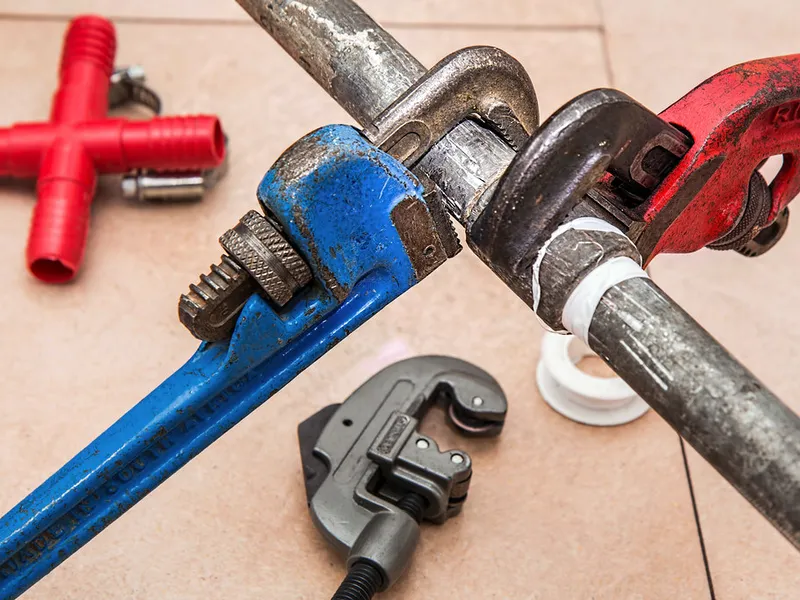
A single-family kitchen line and a shared main serving a multi-family building or a restaurant kitchen aren't the same job, even though both fall under "hydro jetting." We match nozzle size and pump pressure to the actual pipe diameter in front of us rather than running one setup for every call.
That distinction matters most on the commercial side — a grease-heavy restaurant line needs a different nozzle profile than a residential bathroom stack, and using the wrong one either wastes time or risks damaging a line that didn't need that much pressure in the first place.
Serving All of Brockton
Brockton DrainPros covers the full city — from downtown's commercial core through the older triple-decker streets of Campello and Montello, the West Side's mix of historic and newer housing, the East Side neighborhoods around Salisbury Park and Cary Hill, and the multi-family properties near Crescent Court and the Plymouth Street corridor. Every call starts with the same standard: an honest diagnosis of what's actually happening in the line, a price before any work begins, and equipment matched to what your specific pipe can handle — not a franchise script applied the same way on every street in the city.
How It Works
Diagnose the Line First
We confirm what we're dealing with before deciding jetting is the right tool.
Calibrate Pressure to the Pipe
Sound pipe takes full pressure; compromised pipe gets a conservative setting.
Full Wall-to-Wall Clean
Not just a channel through the clog — the entire interior surface is scoured.
Confirm the Fix Holds
We run water through the line before we consider the job done.
Common Questions — Hydro Jetting
What is hydro jetting?
Hydro jetting is a drain and sewer cleaning method that uses a high-pressure water stream, delivered through a flexible hose and a rotating nozzle, to scour the entire interior wall of a pipe clean. It removes grease, scale, sludge, sand, and root intrusion from the full diameter of the line — not just a narrow channel through whatever's currently blocking it.
How does hydro jetting work?
A jetting hose is fed into the line through an existing cleanout or access point. Water is pumped through it at high pressure — typically in the 1,500–4,000 PSI range for residential and light-commercial work, with truck-mounted equipment capable of considerably more at the pump — and a nozzle at the end sprays both forward and backward as it's pulled through the pipe. The backward-facing spray pulls the hose along while blasting debris off the pipe walls; the forward jets break up blockages ahead of it. The result is a pipe interior cleaned to close to its original diameter, not just an opened path.
When do you need hydro jetting?
The clearest signal is a repeat pattern rather than a single incident: a drain that's needed snaking more than once for the same blockage within a year, a line that's slow rather than fully stopped, visible grease buildup or scale on a camera inspection, or documented tree root intrusion. A genuinely one-time obstruction — something dropped down a drain — is often fully resolved with a standard snake, and we'll tell you that plainly rather than selling jetting you don't need.
What can hydro jetting remove?
Silt and sand, hair and soap buildup, grease and cooking oil residue, mineral scale from hard water, sludge, and tree root intrusion at pipe joints. It's effective on the full range of common drain-line obstructions because it works on the pipe wall itself, not just whatever's currently blocking flow.
How much does hydro jetting cost?
Residential jetting typically runs $350–$600 for a standard single-line job, with the full possible range spanning $100–$2,000 depending on line length, access, and how much buildup needs to come out. Commercial jetting — restaurant grease lines, shared mains in multi-family or high-occupancy buildings — generally runs $950–$2,500, reflecting larger pipe diameters and heavier buildup. We diagnose first and give you a firm number before any equipment goes in the line.
Is hydro jetting safe for old pipes?
It depends entirely on the pipe's actual condition. Sound cast iron and PVC handle full-pressure jetting without issue. A line that's already compromised — a cracked joint, a bellied or sagging section, or deteriorated Orangeburg pipe (common in Brockton homes built before the mid-1970s) — can be damaged by aggressive pressure the same way it can be damaged by anything else pushed through it hard. On any property with uncertain pipe age or history, which describes a large share of Brockton's older housing stock, we run a camera inspection first and calibrate pressure to what that specific line can actually take.
Hydro jetting vs. snaking — what's the difference and which is better?
A cable snake clears an immediate blockage by punching a narrow channel through it. Hydro jetting scours the entire interior diameter of the pipe clean. Snaking is faster and cheaper for a genuine one-time obstruction; jetting is the more durable fix for a line with recurring clogs, grease buildup, or root intrusion, because it removes the actual cause rather than temporarily reopening a path through it. Neither is universally “better” — the right tool depends on what's actually happening in your line, which is why we diagnose before recommending either one.
How often should you hydro jet your pipes?
Most residential lines do well on an 18- to 24-month maintenance cycle. Older homes with cast-iron or clay lines, or any property with a documented history of root intrusion, generally benefit from a tighter 6- to 12-month schedule. Commercial kitchens on the grease-heavy end should be on a 3- to 6-month interval. This is guidance most local competitors don't publish anywhere on their own sites — we'd rather just answer it directly.
Is hydro jetting worth it?
For a line with a recurring clog history, grease buildup, or root intrusion, yes — every credible source on the subject agrees jetting outperforms snaking for long-term results, because full-diameter cleaning lasts longer than clearing a single path through a blockage. It's also water-only, with no chemicals involved, which matters on older pipe where aggressive drain cleaners can do more harm than good. For a genuinely isolated, one-time clog, a standard snake is often sufficient and the more cost-effective choice — we won't upsell you into jetting your line doesn't need.
Does hydro jetting remove tree roots?
Yes. Root intrusion at pipe joints is one of the most common causes of recurring backups in Brockton's older neighborhoods, where clay-heavy glacial-till soil and mature tree cover give roots an easy path toward moisture at pipe seams. Jetting strips root mass from the full pipe wall rather than just clearing a channel through it, which is why it's the more durable answer for a line with an established root problem.
Will hydro jetting prevent future clogs?
It significantly reduces the odds of a repeat clog in the same spot, since it removes the buildup that caused the recurrence rather than just clearing a path through it. It doesn't change the underlying pipe material or age, though — a line prone to root intrusion because of its location and material will still need periodic maintenance jetting to stay ahead of new growth, and a structurally compromised pipe (a belly, a crack, a collapse) needs repair, not just cleaning.
How long does hydro jetting take?
A standard residential line typically takes one to two hours from setup through cleanup, depending on line length and access. Commercial and shared multi-unit lines take longer given larger diameters and heavier buildup. We'll give you a realistic time estimate once we've seen the access point and heard what's been happening with the line.
Hydro Jetting By Neighborhood
Every Brockton neighborhood has its own housing-age and pipe-material story, and it changes how a hydro jetting job actually goes. Find your area below for the specifics.