Main Line Drain Cleaning — Brockton, MA
Main Line Drain Cleaning in Brockton
From Campello's pre-1975 clay pipe to Cary Hill's elevated terrain, we diagnose Brockton's main sewer lines with real, neighborhood-level knowledge — not a generic citywide script.
Signs It's Your Main Line
- Every fixture in the house is backing up together
- The lowest drain (basement floor drain, first-floor toilet) backs up first
- Multiple toilets gurgle when you run water elsewhere
- A single-fixture fix didn't resolve the problem
Probably Just One Fixture If
- Only one sink or drain is affected
- Other fixtures drain normally
- This is the first time it's happened
Why Brockton's Main Lines Fail More Than the National Average
A main sewer line problem is different from a single clogged drain, and treating it like one is the most common mistake we see homeowners and property managers make across Brockton. The main line is the shared pipe that every fixture in a house or building ties into before it reaches the city sewer main under the street — when it's compromised, you don't get one slow sink, you get multiple drains struggling together, a basement floor drain that backs up before anything upstairs does, or a toilet that gurgles the moment the washing machine starts draining. Diagnosing that correctly, and understanding why it's happening at your specific address, is the whole job.
Brockton's housing stock is old by national standards, and much of it predates modern plumbing codes entirely. Pre-World War II triple-deckers with original cast-iron stacks sit alongside mid-century single-families, with pockets of clay and Orangeburg pipe — a bituminous-fiber material made from compressed wood pulp and pitch — still in the ground in the city's oldest sections. Orangeburg was cheap and fast to install during the postwar building boom, but it was never engineered to last a century; any lateral installed before the mid-1970s is now, by any reasonable estimate, at or past the end of its practical service life. It doesn't usually fail all at once — it deforms and blisters gradually under soil pressure, narrowing the pipe's effective diameter until a manageable clog turns into a full backup with very little warning.
Layered on top of the pipe-age problem is the region's soil. Southeastern Massachusetts sits on clay-heavy, glacial-till soil that shifts with seasonal freeze-thaw cycles, gradually separating pipe joints and giving tree roots an easy path toward any seam in a cast-iron, clay, or Orangeburg lateral. None of this is a homeowner's fault — it's a citywide combination of infrastructure age and geology that a one-size-fits-all national drain-cleaning script simply doesn't account for.
At a Glance
Main Line Risk, Neighborhood by Neighborhood
Campello
One of the highest concentrations of pre-1975 clay and Orangeburg pipe in the city, tied to its older, denser housing stock.
Montello
A mixed residential-industrial legacy means a wider spread of pipe materials and installation ages block to block.
Downtown Brockton
Density means a main line problem rarely stays contained to one household — landlord vs. tenant responsibility comes up often.
Cary Hill
Genuinely elevated terrain changes lateral depth, gravity flow, and how quickly a slow drain turns into standing water.
Clifton Heights
Postwar suburban construction means cast iron and early PVC rather than the clay our older neighborhoods still carry.
A City That Isn't One Neighborhood
What makes Brockton's main line landscape genuinely different block by block is that the city isn't one uniform housing stock — it's a patchwork of neighborhoods with distinct development histories, and the risk profile changes accordingly. Campello, historically known as Plain Village and home to its own MBTA Commuter Rail station, carries one of the highest concentrations of pre-1975 clay and Orangeburg pipe in the city, tied directly to its older, denser housing stock built up around the shoe-manufacturing era. Montello, anchored by its own commuter rail stop, has a mixed residential-industrial legacy that means a wider spread of pipe materials and installation ages than a neighborhood built out on a single development timeline.
Downtown Brockton's density adds a different wrinkle entirely: multi-family buildings and older commercial blocks near City Hall where a main line problem rarely stays contained to one household, and where the question of who's responsible — landlord, tenant, or the city — comes up on nearly every call. Cary Hill, on the city's east side, sits on genuinely elevated terrain, which changes lateral depth, gravity flow, and how quickly a slow drain can turn into standing water compared to a flat lot elsewhere in the city. And Clifton Heights, developed mostly during the postwar suburban boom, has a meaningfully different pipe-age profile than Brockton's oldest, pre-1940s sections — cast iron and early PVC rather than the original clay our older neighborhoods still carry.
No two of these neighborhoods have the same main line risk profile, which is exactly why we built dedicated pages for each one rather than running the same generic citywide content with the neighborhood name swapped in. If you want to go deep on your specific area, use the neighborhood list further down this page.
Snaking vs. Hydro Jetting: How We Decide
A cable snake clears a blockage by punching a hole through it — fast, effective, and the right call for a single obstruction. It doesn't, however, address buildup coating the rest of the pipe wall. Hydro jetting uses high-pressure water to scour the entire diameter of the line clean, which is the better option when a camera inspection shows grease buildup, mineral scale, or root mass rather than one discrete blockage, or when the same section has needed repeat service within the past year. We tell you plainly which one your specific main line actually calls for — jetting isn't a default upsell here, it's a recommendation based on what the camera shows.
When the Fix Goes Beyond Cleaning
Section Repairs Built to Match What's Actually in the Ground
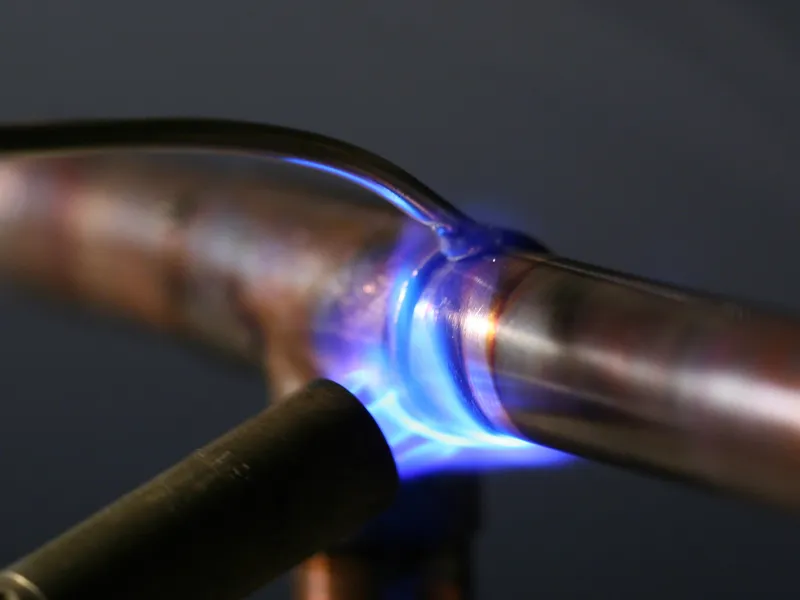
Most main line calls resolve with cleaning. When a camera inspection shows a genuinely structural problem — a cracked joint, a failed transition between old and newer pipe — the repair is scoped to that specific defect using materials and fittings matched to what's already there, not a generic patch.
We'd rather tell you plainly that a section needs real repair than clean around a structural problem repeatedly and let it fail on its own schedule.
What a Camera Inspection Actually Tells You
When a main line has needed snaking more than twice in the same spot within a year, that repeat pattern is usually the pipe itself signaling a structural problem — a bellied section, a partial collapse, root intrusion at a joint, or a transition between old clay or cast iron and a newer repair. A camera run down the line shows exactly what's happening rather than leaving it a guess, and it turns every future service call from uncertainty into a known quantity. If you're a property owner who's never had a camera inspection done, it's worth considering even without an active problem — knowing whether your lateral is original clay, Orangeburg, aging cast iron, or already-replaced PVC changes how you budget for maintenance going forward, and the footage is yours to keep either way.
Preventing a Repeat Main Line Emergency
A handful of habits meaningfully reduce how often any Brockton property needs emergency main line service. Avoid pouring grease or cooking oil down kitchen drains — it's the single biggest contributor to buildup in aging cast-iron and Orangeburg lines citywide, where reduced diameter already leaves less margin for error than a newer PVC line would have. If a drain has needed snaking more than twice in the same spot within a year, that repeat pattern is almost always the pipe itself signaling a structural problem, not bad luck — a camera inspection at that point is a smaller expense than the eventual emergency dig if the section is left to fail completely. And if you're a landlord anywhere in the city with tenants in an older triple-decker, make sure they know not to flush wipes, paper towels, or feminine hygiene products; material that a modern PVC line tolerates without issue can catch on a rougher cast-iron, clay, or Orangeburg interior and start a blockage far faster than expected.
For any property owner who's never had a camera inspection done, it's worth considering even without an active problem, regardless of which Brockton neighborhood you're in. Knowing whether your lateral is clay, Orangeburg, aging cast iron, or already-replaced PVC changes how you budget for future maintenance, and it turns every future service call from a guessing game into a known, plannable quantity.
Whole-Building Priority
A Main Line Call Gets Treated Like the Emergency It Is
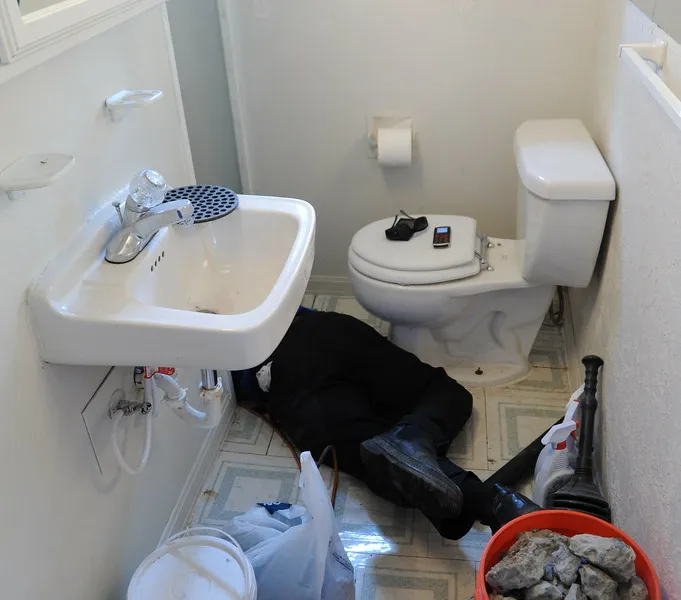
When every fixture in a building is affected at once, the priority shifts — we move straight to diagnosing the shared line rather than working through individual drains one at a time, which just wastes time when the actual blockage sits downstream of all of them.
That's true whether it's a single-family home or a multi-family building where several units are relying on the same line staying clear.
Our Process on Every Brockton Main Line Call
We ask about the property's age, neighborhood, and repair history before a technician even leaves, because that context meaningfully narrows down the likely cause before we're on site. We diagnose before we treat — a snake clears the immediate blockage, and if the pattern suggests something structural rather than a one-time obstruction, we recommend a camera inspection so you can see exactly what's happening instead of taking our word for it. You get a price before any work starts, full stop, and if we run a camera, you keep the footage. Emergency dispatch runs 24/7 across the entire city, with active sewage backups, standing water, and multi-fixture failures prioritized ahead of routine scheduling.
How It Works
Confirm Main vs. Single Fixture
We diagnose the main line directly rather than treating each drain individually.
Diagnose the Blockage Location
A camera inspection tells us in minutes whether we're clearing a clog or looking at a repair.
Clear the Full Line
Equipment sized to the main line's diameter, not a branch-line snake.
Confirm Every Fixture Drains
We test multiple fixtures before considering the job complete.
Main Line Drain Cleaning By Neighborhood
Every Brockton neighborhood has its own housing-stock age, pipe-material risk, and terrain considerations. Find your area below for a diagnosis that starts from what's actually common on your specific streets.
Common Questions — Brockton
What's the difference between drain cleaning and main sewer line cleaning?
Drain cleaning clears a single fixture — one sink, tub, or toilet line. Main sewer line cleaning treats the larger shared pipe that every fixture in the house or building ties into before it leaves the property and connects to the city sewer main under the street. If more than one drain is backing up at the same time, or a basement floor drain is overflowing before an upstairs fixture does, that's a main line symptom, not an isolated clog, and treating it like one just delays finding the real cause.
How much does main line drain cleaning cost in Brockton?
It depends entirely on what's actually causing the problem. A standard snaking to clear a straightforward blockage costs meaningfully less than hydro jetting a line coated in grease and scale, and both cost less than anything that turns out to need excavation or a section repair. We diagnose the specific cause before quoting a number — giving a price before we know what's wrong either overcharges for a simple fix or underquotes and adds charges later, and we don't do business that way.
What are the signs I need main line service instead of a single drain snaked?
Multiple fixtures backing up at once, a toilet that gurgles when the washing machine drains, water pooling in the yard near where the lateral runs toward the street, or a basement floor drain that backs up before any upstairs fixture does — any of these point to the main line rather than a single clog. A lone slow drain confined to one room, without any of those broader patterns, is usually isolated and can typically wait for a scheduled visit rather than an emergency call.
How often should a main sewer line be cleaned?
For most homes without a history of repeat problems, main line cleaning is reactive rather than something on a fixed calendar. Properties with mature trees near the lateral's path, a documented history of root intrusion, or pre-1970s clay or Orangeburg pipe are the exceptions — for those, periodic maintenance cleaning can prevent a full backup rather than waiting for one to happen and dealing with the emergency and the mess that comes with it.
Can hydro jetting damage old pipes?
It's a fair concern, and the honest answer is: it depends on the pipe's actual condition. Modern jetting equipment lets us control water pressure to match what a line can handle, but a badly deteriorated section — heavily corroded cast iron or already-cracked pipe — is more susceptible to damage from aggressive jetting than a structurally sound line. That's why we assess the pipe's condition, often with a camera, before deciding whether jetting is the right call or whether a gentler approach makes more sense for your specific line.
Is main line drain cleaning covered by homeowners insurance?
It varies by policy, and we're not insurance agents, so we won't guess on your behalf. Some homeowners policies cover sudden, accidental damage from a backup but exclude gradual wear-and-tear issues like an aging clay or Orangeburg lateral finally failing — which is frustrating, because that's exactly the kind of problem we see most often in Brockton's older neighborhoods. Camera inspection footage and clear documentation from us can help support a claim either way, which is one more reason we always give you the footage rather than just a verbal summary.